





“The Amiga was my first school.” For pixel artist Klas Benjaminsson, that’s less nostalgia than a CV. The Swedish creator of the Masters of Pixel Art book series learned his craft on Commodore’s 16-bit wonder, and three decades later, he’s gone back to class, creating a brand-new artwork entirely on an original Amiga 1200 (the Amiga ranks in our best retro consoles guide).
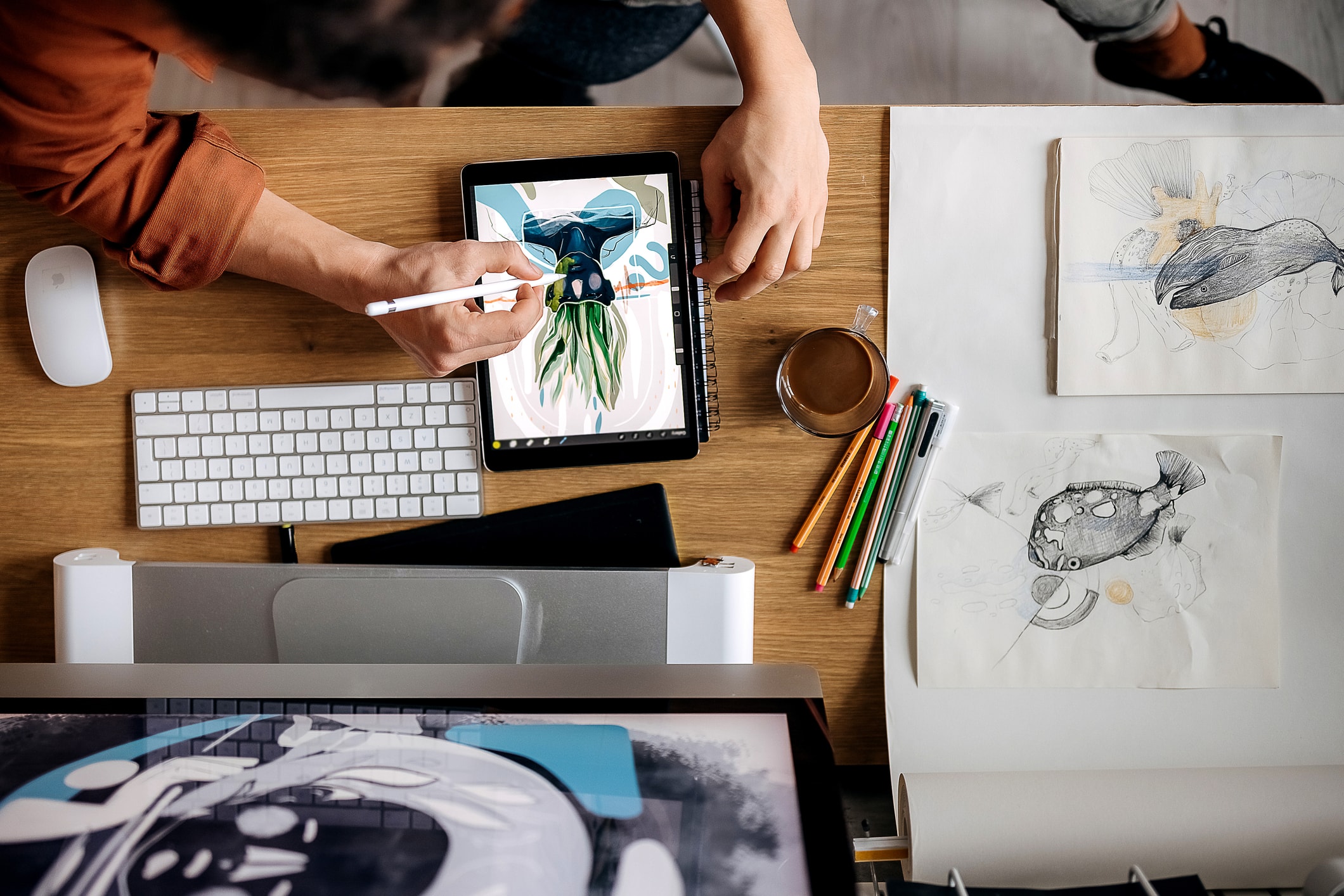
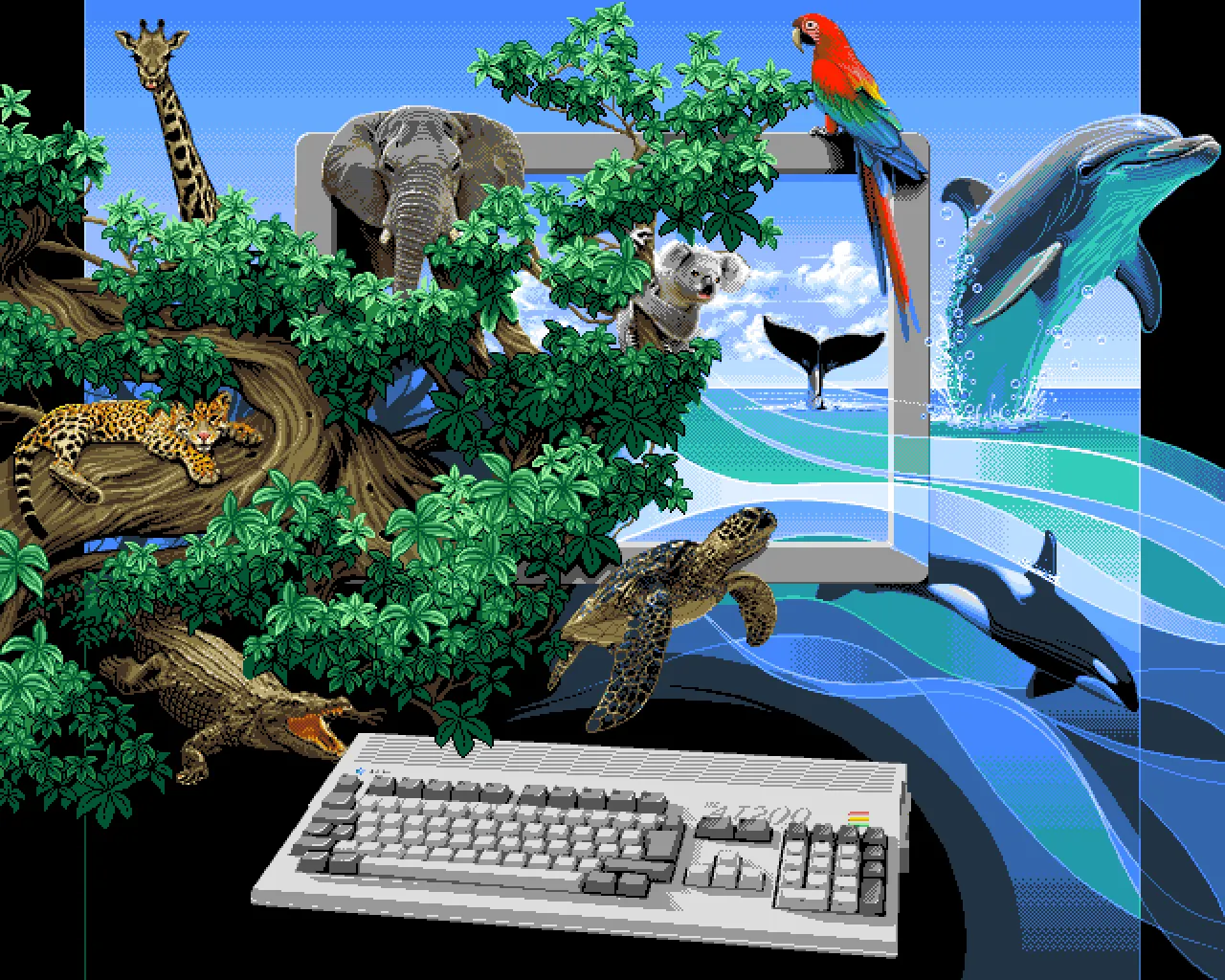
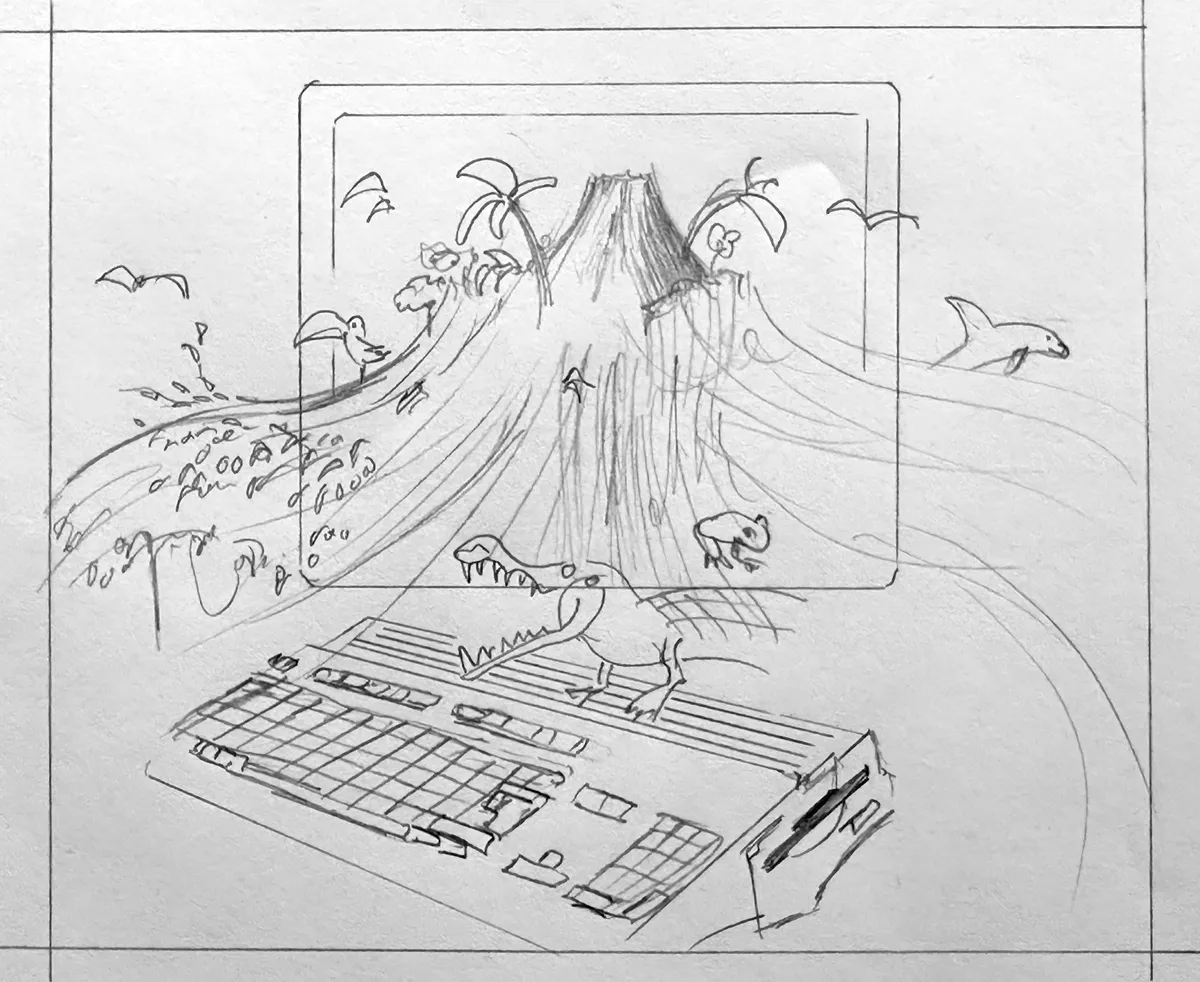
The result is Beyond the Screen: wildlife, lush vegetation and ocean life bursting out of a glowing monitor. It’s built from just 640 x 512 pixels and 32 colours, a canvas that would make a modern phone wallpaper blush. Benjaminsson first sketched in pencil, then brought it to life in Deluxe Paint 4. He calls the Amiga’s limits a “sweet spot”: tight enough to push against, generous enough to make something great.
- For a taste of the Amiga, read our Apidya' Special review on Switch 2
The Jim Sachs' inspired art
It’s also a nod to Jim Sachs’ Amiga Lagoon, the picture that showed a generation what these machines could do, and a love letter to an era when your imagination really was the only limit.
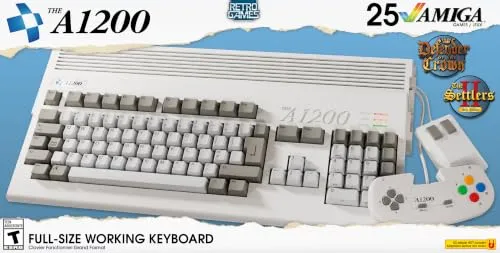
The timing is no accident. Retro Games’ full-size Amiga 1200 replica, THEA1200, lands on 4 December. Unlike the A500 Mini we reviewed in 2022, it comes with a working keyboard and Workbench desktop, so it’s built for creating as well as playing.
Artists can join in too, with PosterSpy inviting its community to reimagine Benjaminsson’s piece in their own style. Need a pixel fix first? Dive into our 31 amazing pixel art examples or learn how to break into pixel art. Then read on as Benjaminsson explains why limits still make for better art, and which retro tools you should try first.
The new THEA1200 arrives on 4 December. See more of Klas Benjaminsson's poster art at PosterSpy x THEA1200.
Creative Bloq: You've created this new artwork entirely on an original Amiga 1200. What was your thinking behind returning to the original hardware instead of using modern art apps?
Klas Benjaminsson: One key point in the initiative of THEA1200 is to recreate the Amiga 1200 in modern shape, so it made sense to honor the original platform.
CB: Can you talk us through how you approached this particular artwork? Where did the initial idea come from, and how did it develop during the creative process?
KB: To be honest, the work "Amiga Lagoon" by Jim Sachs was a very important piece from the beginning. It visualised the power and creativity of the Amiga, and we agreed that an indirect homage to this masterpiece would be suitable for this occasion.There was an idea to create a “flow” coming out from the screen, showing waves of animals, nature and wildlife - flowing and growing out from this creative computer. I wanted a feeling that communicated “only your imagination sets the limits”.From sketch to finish, animals changed and shifted positions. But I felt the core idea was good and continued the work until the end.
CB: The Amiga 1200 has some fairly significant technical limitations by today's standards. How do those constraints influence your creative decisions?
KB: For me personally, growing up with the Amiga 500 and 1200 graphic standards, these limitations became something of a sweet spot for me. Limited enough to make it interesting to push the borders on what could be done, but also good enough to make it possible to create some great designs.
CB: What software and tools did you use to create the piece, and were there any particular technical challenges working on the original hardware?
KB: Deluxe Paint 4 on the Amiga was where bulk of work was done. Photoshop and GrafX2 on the PC: importing the sketches and converting formats for export.
CB: Pixel art is now a popular aesthetic in games and digital illustration; what do you think modern artists miss when they simply recreate a retro aesthetic?
KB: To be honest I think many of modern pixel artists are doing a great job. There are hundreds of active pixel artists right now, posting pixel art on a daily basis with no direct platform or set rules for limits in their work space, but they still set a limited palette and a certain pixel area for their work. I think it's an awesome homage to the old platforms, which lives on so vividly in these modern pixel art works even today.
CB: What was your own introduction to the Amiga, and how important was the computer in shaping your development as an artist?
KB: Digital graphics had a big impact in my youth. As a kid I enjoyed playing video games, but as a young aspiring “artist” I also studied the graphics of the many games I tried (both Arcade and on my own C64). It took several years until a friend of mine showed me his brand new Amiga 500 with Deluxe Paint – that was the moment I realised I might be able to create something like that myself.I took the first steps on a very long and interesting journey on finally becoming an art director. The Amiga was my first school that defined much of my professional life.
CB: Looking at how digital art has evolved, are there any techniques or creative habits you developed on the Amiga that you still use in your work today?
KB: There are many techniques that more or less could be described as artistic knowledge, which I learned on the Amiga but aren't unique for this medium/platform. But there are some routines that could be blamed on my background with old-school pixel art:
- The importance of setting a palette early on in the design process.
- To keep full control of the pixels and resolution.
CB: What do you think artists can learn from working with a computer as technically restricted as the Amiga 1200?
KB: The Amiga provides an interesting set of limitations to work with if you are into pixel art. Enforcing a specific resolution and a limited colour palette when creating pixel art is a very challenging and demanding practice, which forces the artist to be precise. With these clear restrictions in place, much more focus can be aimed at the actual creative work instead.
CB: We're seeing renewed interest in older creative technology, from film cameras to analogue synthesisers and retro computers. Why do you think artists are drawn back to these tools, and is there something about the creative process that we've lost with modern hardware?
KB: I personally find it fascinating to take photos with a classic analogue camera, and see how the film can change with exposure settings. It's a special and rewarding experience to go through the processes by hand. You try and learn by mistakes, testing ideas, creating and discarding concepts, and finally finding a way to express your ideas. Digital tools can be a great help, working alongside you when sketching and trying out ideas. But there is a certain magic about when doing it by yourself, learning the craft.
CB: With THEA1200 arriving this Christmas, what would you say to someone who wants to explore the Amiga as a creative tool rather than simply revisit its games? Are there particular pieces of software or techniques you'd recommend they try?
KB: If you are into pixel art, don't hesitate to try out Deluxe Paint or Brilliance! These are the original software from which most modern pixel art tools has taken their UI concepts, as well as the early versions of Photoshop.If you are into creating music, try out some of the tracker software such as ProTracker, or AHX for unique chip sounds.For young people learning to code, AMOS is a fun and powerful language to start with. Something that could transition into C++ later on.Another nice tool was Dir Opus, file-handling made easy and logical. I wish Microsoft or Apple would have picked it up back in the days....
Retro replica 80s and 90s consoles and computers to buy: