KPop Demon Hunters has become a cultural phenomenon. Maggie Kang and Chris Appelhan's movie has a good shot at Oscars glory this week after already picking up a haul of accolades at the likes of the VES Awards for visual effects and the Concept Art Awards.
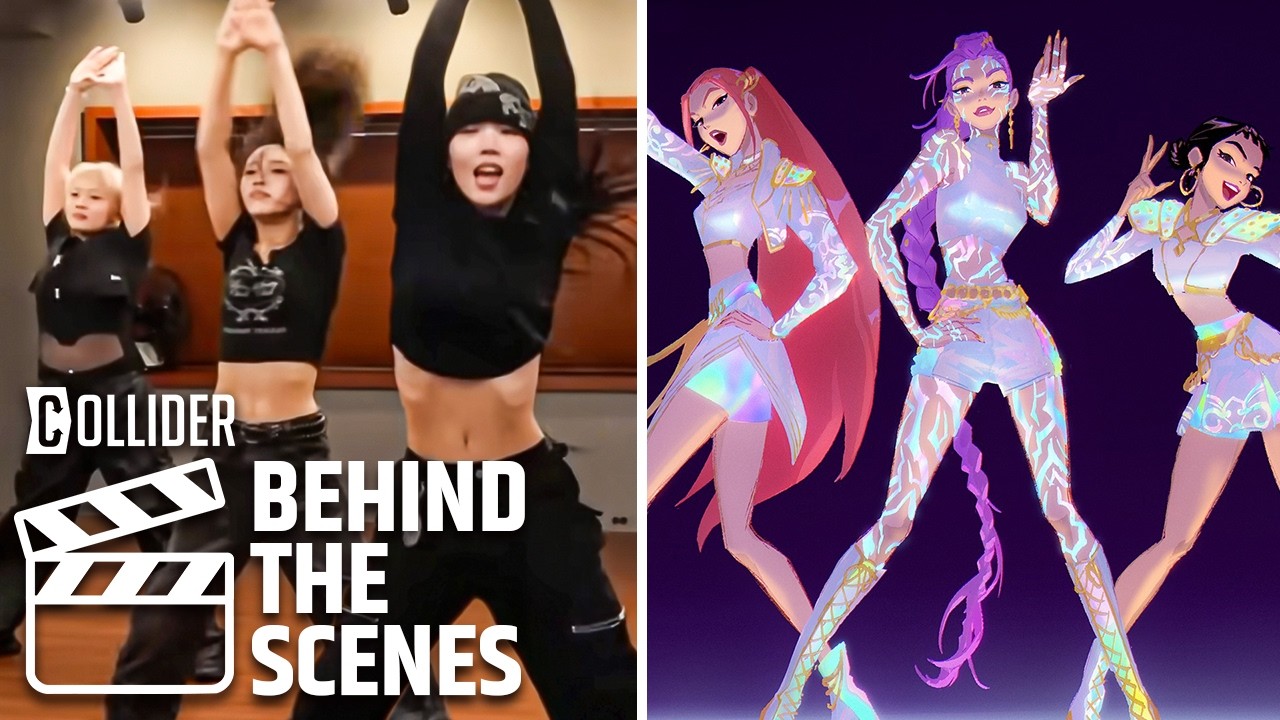
The surprise Netflix hit is an example of how cutting-edge tech is changing the way animated movies are made. We've already had a glimpse into the art of KPop Demon Hunters. Now a new behind-the-scenes video shows how Unreal Engine 5, one of the best game development programs, revolutionised the film's animation pipeline.
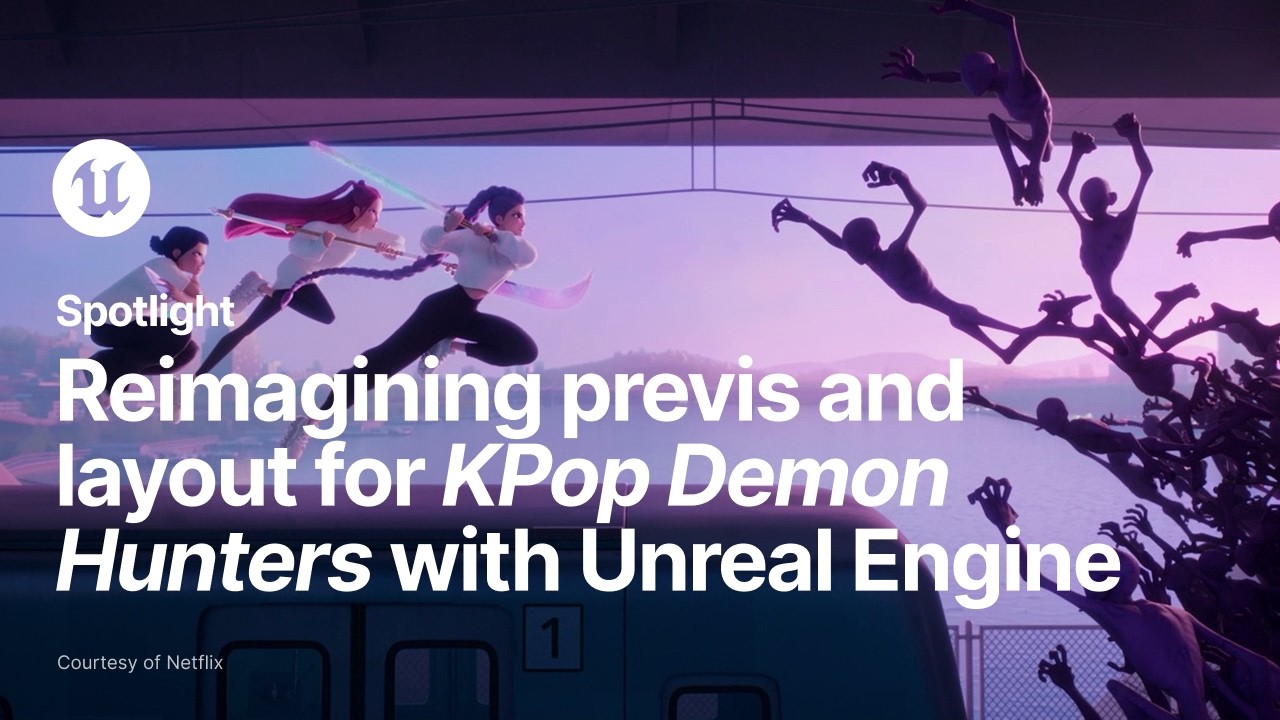
Unreal Engine 5 is most known in game development. It was the engine used to push graphical fidelity in acclaimed games like Clair Obscur Expedition 33, Black Myth: Wukong and Senua's Saga: Hellblade II. But it's also used for movie VFX and virtual production.
Article continues belowSony Pictures Imageworks used Maya to animate KPop Demon Hunters (see our guide to the best animation software). It added Unreal Engine to its toolkit to revamp its CG layout and previsualisation pipeline, modernising various areas with real-time technology and USD frameworks and connecting its departments in ways that weren't possible before.
According to head of visualisation Adam Holmes in the video above, this new way of working allowed artists to be "more creative and more cinematic with the types of shots and creative camerawork on the film", seeing things that directors and filmmakers weren't able to visualise before until months later in the process.
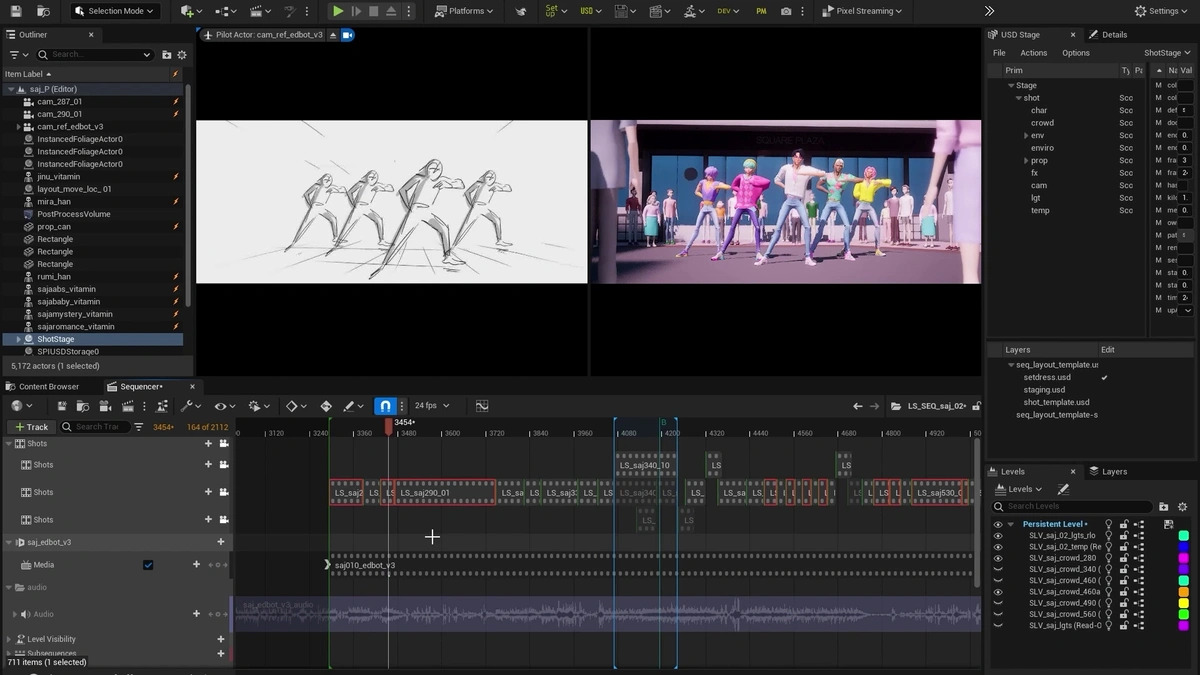
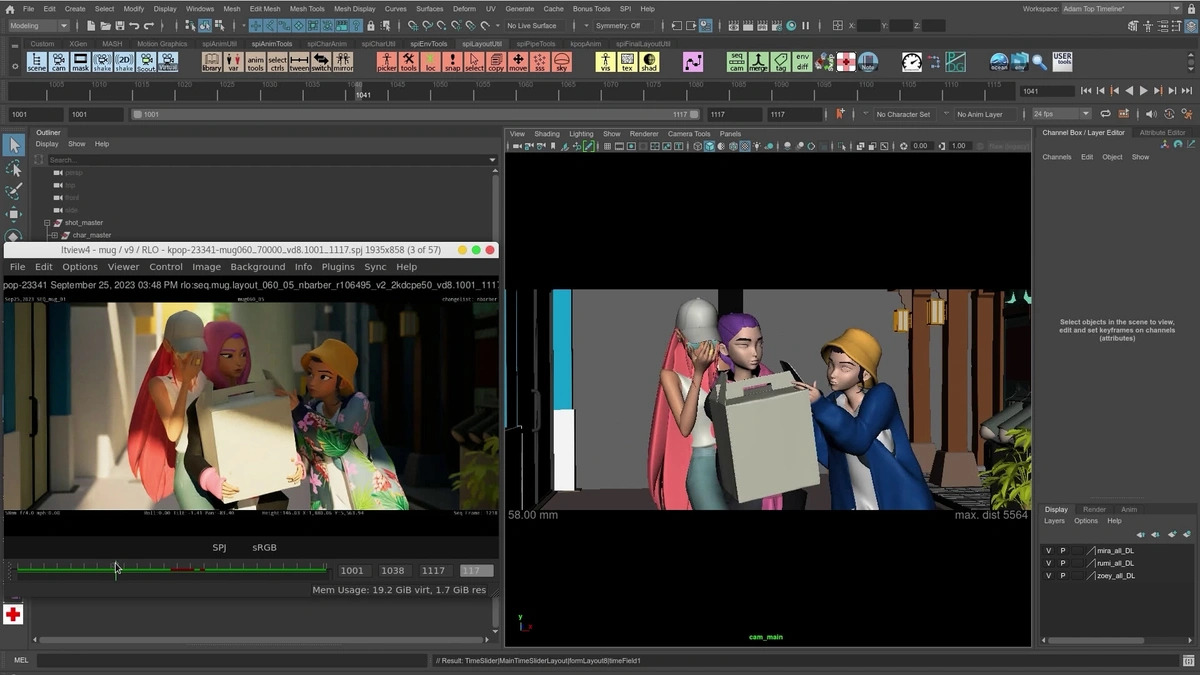
The software was particularly useful for scenes with lots of people in them. The team created control rigs in UE5 and built a system for quickly swapping outfits and accessories. For crowd scenes, they were able to create just one body type and quickly populate a stadium, for example..
“We just needed to create one body type and a bunch of hairstyles,” said Lillia Lai, Rigging Development Lead. “Then we could swap out the hairstyles and clothing in any combination we want, and pair that up with Unreal’s Foliage tool to quickly populate a whole stadium crowd.”
Concerts also provided an opportunity to experiment with lighting in different ways using Unreal Engine. The team could animate hundreds of lights and then create a plugin to export that into Katana, the lighting and look development software in which 3D assets from various departments are assembled, textured, and lit before being sent to rendering.

KPop Demon Hunters was also the first time Sony Pictures Imageworks shot through real-time volumetrics. Real-time supervisor Jason Baldwin describes how for the bathhouse fight scene, Unreal Engine allowed the team "dial up the materials and make everything feel wet and reflective and foggy".
A layout artist blocked out the scene in about a week, rapidly approximating something close to the final render at the layout stage.

The team used OpenUSD (Universal Scene Description) as an asset import format and created their own script to be able to communicate with Unreal Engine from their traditional pipeline.
The process helped them work faster. "Our initial export time was six to eight hours per sequence,” says real-time pipeline supervisor Jonghwan Hwang. “But accessing the source code is a big deal, we were able to reduce this down to 30 minutes, and now we’re exporting sequences in five minutes.”
With the new pipeline tested and refined on KPop Demon Hunters, Sony has adopted the pipeline for future animation projects (and its latest, Goat). It expects the change will help teams work 20 to 25 per cent faster at the layout and previs stage.
For more animation inspiration, see why new release Hoppers looks so different from other Pixar movies, and don't miss our Zootopia 2 quiz.
More KPop Demon Hunters behind-the-scenes
We've previously seen how Sony Imageworks' senior animator Daniel Ceballos acted out live-action performances himself to use as references for KPop Demon Hunters' animation. And since the movie is so extravagantly cartoony, his performances had to be suitably over the top.
Was lucky enough to animate these chaotic shots of Zoey :) it had been a while since l'd done something this cartoony, and I had a blast! 🧵 #KpopDemonHunters #KPDH pic.twitter.com/pY4VHJwmDMJune 26, 2025
We weren't sure whether Zoey moves like Daniel, or if Daniel has an uncanny ability to move like a cartoon character. It shows that 3D animators can benefit from having acting skills as well as animation skills.
Meanwhile, in the video below for Collider, head of cinematography Gary Lee shares how TikTok-inspired, head-locked framing and concert-style coverage influenced the film's look.
You must confirm your public display name before commenting
Please logout and then login again, you will then be prompted to enter your display name.