The use of generative AI for creative work continues to create stark divisions in opinion. It sometimes feels that debate has moved on little in the last three years: there are evangelists who see AI as the gilded future and opponents who see it as the end of human creativity.
But could another kind of divide be emerging, not of opinion but of access and knowledge? The extent to which AI will change creative work is yet to become fully apparent, but a a new documentary dives into the nuanced views of a wide range of creatives and finds interesting contrasts and contradictions.
The Strategic National Arts Alumni Project (SNAAP) found that 90% of creatives expressed skepticism about generative AI, and yet 52 per cent said they were already using it professionally. But adoption appears to be far from equal.
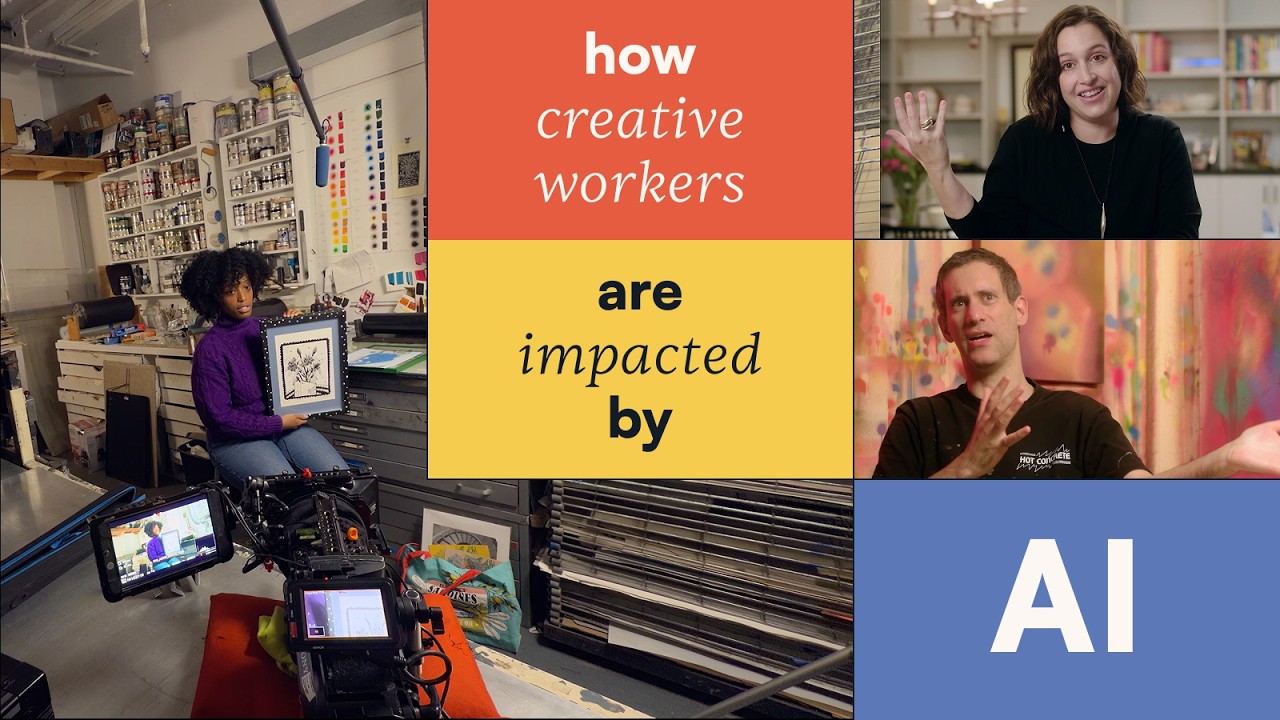
SNAAP is based at the College of Fine Arts at the University of Texas at Austin. For its Pulse Survey on AI and Work conducted late last year, it interviewed over 2,000 post-secondary arts and design graduates in a wide range of creative fields from more than 100 colleges and universities in the US. The aim was to learn how they feel about AI and how it's impacting their work.
The responses were compiled into the 19-minute documentary above by filmmaker Jan Oliver Lucks. The film reveals lingering concerns, including issues around copyright, privacy, environmental impact and creative integrity, while also touching on some of the practical ways creatives are actually using AI in their work. The result is a broad and honest overview of a range of opinions among, from enthusiasm to cautious adoption and outright rejection.
The survey found that the extent to which creatives use AI tends to depend on how much their work already involved the use of digital tools. Logically, those in creative fields with a heavy dependence on digital software appear more likely to have embraced AI. An architect speaks of using AI to generate 3D models from drawings, while a graphic designer talks of generating large backdrops from small images.
The video suggests that a kind of AI divide may be emerging, with the likelihood of AI adoption higher among those who can "afford the risk", as the film puts it.
In a paper based on the research, SNAAP Senior Research Fellow Joanna Woronkowicz and her team suggest that the "key inequality question is therefore not only ‘who will AI replace?’ but also ‘who has the time, trust, training, and work conditions to make AI useful?’”
In the film, a creative director, notes that the advertising agency she works for has a dedicated AI content creator who's job it is to keep on top of the tech and to educate creatives and strategists on how to use AI. That's a luxury that most individual creatives and smaller agencies are unlikely to have.
Concerns around copyright and IP remain one of the big issues for many of those interviewed. Visual artists, such as illustrators are notably more circumspect than other types of creatives, both out of the frustration with tech companies profiting unfairly from their work to philosophical issues around the meaning of art.
Of course, AI is a broad term and there are many shades of grey. Most digital art software and graphic design software now includes some form of AI, but not necessarily text-to-image generation that tends to cause most controversy. The short film shows some of the complex reality around AI's disruptive force. Some creatives see generative AI software as a tool that allows them to get the ideas in their heads onto paper faster. Others fear that art and creativity lose something in the process.
Interestingly, the interviewees who work in performing arts such as theatre and music are hopeful that the rise of AI in other fields of art could be a boon for live entertainment as people seek out the few art forms that they can still be sure offers a human-created experience.